Long journeys, whether by plane, train, or car, often come with the unwelcome companion of discomfort. Trying to catch a few hours of sleep while seated upright can lead to a stiff neck, sore shoulders, and a less-than-rested arrival. This is where a well-chosen travel neck pillow becomes an indispensable companion, transforming cramped spaces into havens of rest. With countless options on the market, finding the perfect one can seem daunting. This comprehensive guide will help you navigate the world of travel neck pillows, ensuring your next adventure is as comfortable as it is exciting.
Why You Need a Travel Neck Pillow
The importance of quality sleep cannot be overstated, even when you’re on the move. While the gentle motion of travel can sometimes be lulling, abrupt movements, awkward seating positions, and the inability to properly support your head can severely disrupt your rest. Your head, which weighs roughly as much as a bowling ball, needs proper support to prevent strain on your delicate neck muscles and spine.
Unlike a standard pillow, which is designed for horizontal sleeping, a travel neck pillow is specifically engineered to provide ergonomic support while you’re in an upright or semi-reclined position. This specialized design helps to maintain the natural alignment of your cervical spine, preventing your head from falling forward or awkwardly to the side. The health benefits extend beyond avoiding a “tech neck” or stiffness; proper neck support can mitigate headaches, reduce muscle tension, and contribute to overall well-being, allowing you to arrive at your destination feeling refreshed and ready to explore.
Popular Types of Travel Neck Pillows
The market offers a diverse range of travel neck pillows, each designed with unique features to cater to different preferences and sleeping styles. Understanding the characteristics of each type is key to making an informed choice.
U-shaped Pillows
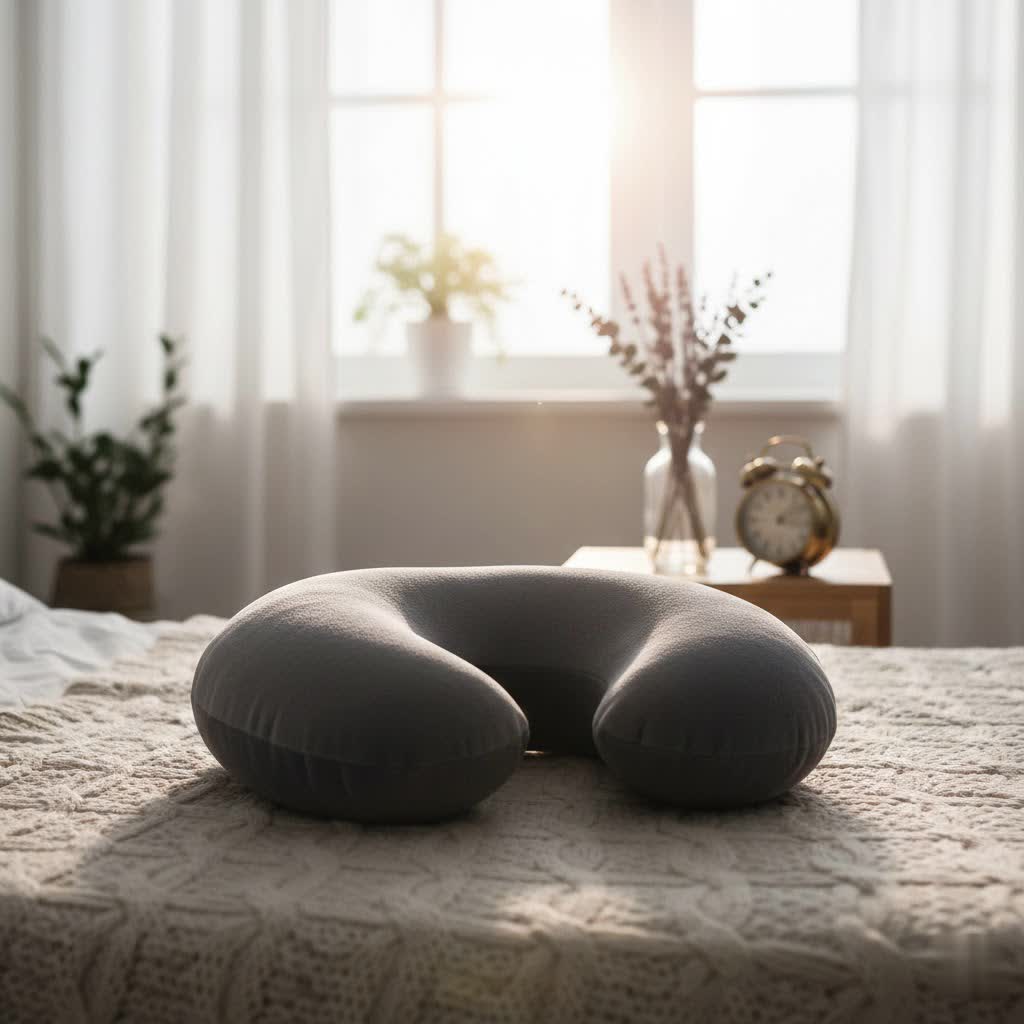
The classic U-shaped pillow is perhaps the most recognizable design. It wraps around the back and sides of your neck, providing support to prevent your head from tilting excessively.
- Pros: Generally good for side-to-side support, widely available, and come in various materials. Many U-shaped pillows now include adjustable closures at the front to prevent the head from falling forward.
- Cons: Some traditional designs can push the head forward if they are too thick at the back, or lack adequate chin support. They can also be bulky to carry unless they are inflatable or highly compressible.
- Common Materials: Often made from memory foam for contouring support, microbeads for a softer, more pliable feel, or inflatable bladders for compact storage.
- Ideal For: Those who primarily lean their head to the side while sleeping or need basic all-around neck cushioning.
|
Our Picks for the Best Travel Pillow in 2026
As an Amazon Associate I earn from qualifying purchases.
|
||
| Num | Product | Action |
|---|---|---|
| 1 | Adjustable Car Seat Lumbar Support Pillow Dual Straps Memory Foam Lower Back Waist Support Cushion with Convex Point Design Removable Cover for Vehicle SUVs Driving Travel Accessories Office Chair |

|
| 2 | Ormark Travel Pillows for Airplanes, 2026 New Travel Pillow with Eye Mask & Ear Plugs, Travel Neck Pillow Airplane 100% Memory Foam 360 Degree Support Stowable Pillows(Gray) |
|
| 3 | SZXYX Travel Pillows - 100% Pure Memory Foam Neck Pillow for Airplanes, Comfortable Breathable Cover, 360° Support Stowable Pillows for Sleeping, Car, Airport Travel Essentials Dark Grey |
|
| 4 | napfun Neck Pillow for Traveling, Upgraded Travel Neck Pillow for Airplane 100% Pure Memory Foam Travel Pillow for Flight Headrest Sleep, Portable Plane Accessories, Light Grey |
|
| 5 | Travel and Camping Pillow- Compressible Medium Firm Memory Foam Pillow with Carry Bag for Backpacking & Airplane, Lumbar Support. Breathable Cooling Fabric, Washable Pillowcase (Wathet Blue) |
|
| 6 | FlyHugz® Neck Travel Pillow - Memory Foam Neck Pillow for Comfort on Airplane - Compact and Ergonomic Design for Travel, Car Rides, and Home Use - Ideal for Adults and Kids |
|
| 7 | SAIREIDER Travel Pillows for Sleeping Airplane 100% Pure Memory Foam Neck Pillow for Airplanes Washable Cover(Grey) |
|
| 8 | SAIREIDER Travel Pillow 100% Pure Memory Foam Travel Neck Pillow, Airplane Pillow for Traveling、Car、Home、Office,Washable Cover(Black) |
|
| 9 | Cabeau Airplane Travel Pillow for Long Flights - Evolution S3 - Supportive Memory Foam with Seat Straps to Secure Your Head and Neck and Provides 360° Support (Jet Black) |
|
| 10 | Dot&Dot Twist Memory Foam Travel Pillow for Airplanes - Travel Neck Pillow for Sleeping - Airplane Pillow for Neck Support, Chin, Lumbar and Leg - Adjustable, Bendable Neck Roll Pillow |
|
Rectangular Pillows
While less common as dedicated neck support for upright sleep, rectangular travel pillows serve different purposes. They are typically smaller versions of traditional pillows.
- Pros: Highly versatile, can be used for lumbar support, propped against a window or armrest, or even as a small head pillow for more relaxed, reclined positions. They often offer a familiar, soft feel.
- Cons: Offer minimal direct neck support when sitting upright in a seat without a solid surface to lean against. They won’t prevent head bobbing.
- Differences from U-shaped: U-shaped pillows are specifically for neck alignment; rectangular pillows are more general-purpose comfort items.
- When to Choose: If you have a window seat and prefer to lean, or if you need a multi-purpose pillow for various comfort needs beyond strict neck support.
Inflatable Pillows
Inflatable travel pillows are favored for their incredible portability. They typically feature a PVC or similar bladder that can be inflated to your desired firmness and deflated for compact storage.
- Pros: Extremely lightweight and compact when deflated, making them easy to pack into small bags. The firmness is adjustable by adding or releasing air, allowing for personalized comfort.
- Cons: Can feel less plush or “natural” than foam or microbead options. The material might not be as breathable, and there’s a risk of puncture. Some users find them less stable or comfortable.
- How to Use and Care: Simply inflate by mouth to your preferred firmness. To deflate, press the air release valve and squeeze out the air. Most are hand-wash only due to the internal bladder.
- Ideal For: Minimalist travelers, backpackers, or those with very limited luggage space where portability is the top priority.
Microbead Pillows
Microbead pillows are filled with tiny polystyrene beads that conform closely to the shape of your neck and head. They often come in U-shaped or other flexible designs.
- Pros: Offer a soft, squishy, and malleable feel that can be quite comfortable and adapt to different contours. They are generally lightweight.
- Cons: Can be bulkier than inflatable options and less firm than memory foam, which might not provide adequate rigid support for some. The beads can sometimes shift, requiring readjustment.
- Considerations: Look for a durable cover to prevent bead leakage. While comfortable, ensure the level of support is sufficient for your needs, especially for longer journeys.
- Ideal For: Those who prefer a softer, more flexible pillow that molds to their shape, and prioritize plush comfort over rigid support.
Comparison Table: Key Features of Travel Neck Pillow Types
| Feature | U-shaped (General) | Rectangular (Travel) | Inflatable | Microbead |
|---|---|---|---|---|
| Pros | Good side-to-side neck support, widely available | Versatile, multi-purpose comfort, soft | Extremely compact, adjustable firmness | Soft, pliable, conforms to shape, lightweight |
| Cons | Can push head forward, potentially bulky | Limited dedicated neck support for upright sleep | Less plush, potential for puncture, less durable | Can be bulky, less firm support, beads shift |
| Common Fills | Memory foam, microbeads, polyester | Cotton, polyester, down alternative | Air (PVC/TPU bladder) | Polystyrene microbeads |
| Best For | General neck support, diverse options | Leaning against surfaces, lumbar support | Minimalist travelers, space-saving | Soft comfort, adaptable fit |
How to Choose the Right Travel Neck Pillow
Selecting the perfect travel pillow involves considering several personal factors to ensure maximum comfort and support.
Material
The pillow’s fill material significantly impacts its comfort, support, and breathability.
- Memory Foam: Offers superior, firm support and excellent contouring properties. It molds to the unique shape of your neck and head, providing stable alignment. Look for high-density memory foam for better durability and consistent support. However, memory foam can sometimes retain heat, so prioritize options with breathable covers or cooling gel infusions. It’s often recommended for individuals needing robust support to prevent head bobbing and maintain spinal alignment.
- Microbeads: Known for their soft, squishy, and highly malleable feel. They allow the pillow to conform to many positions, offering personalized comfort. While lightweight, they provide less rigid support than memory foam and can be less ideal for those requiring strong neck stabilization. They are a good choice for sensitive skin due to their adaptable nature.
- Inflatable: The most lightweight and packable option. Air-filled pillows allow you to customize firmness, which is a major advantage. However, they typically lack the plush feel of other materials and can be less breathable. Choose one with a soft outer fabric for better comfort.
- Cotton/Polyester Fills: Found in some U-shaped or rectangular pillows, these offer a soft, cushioned feel but generally less structured support for the neck. They are often breathable and easy to wash.
Size and Weight
Portability is crucial for any travel accessory.
- Choose a size appropriate for your body and sleeping posture. Consider if you’re a forward sleeper, a side leaner, or tend to sit upright. Some pillows are designed for specific body types or neck lengths.
- Prioritize lightweight and easy-to-carry pillows. Many come with compression bags or clips to attach to luggage, significantly reducing their footprint.
- Pay attention to the packed size when folded or compressed. A pillow that’s too bulky will quickly become a nuisance, even if comfortable. Inflatable pillows excel in this area.
Support Level
The primary function of a travel neck pillow is support.
- Crucial Neck Support: Ensure the pillow provides adequate support to keep your head from tilting or falling excessively. This means preventing your head from dropping forward (chin support) and from leaning too far to the sides or back.
- How to Assess Support: When trying a pillow, note if it fills the gap between your neck and the seat, and if it holds your head in a neutral position. For those with specific neck issues, a pillow offering robust, firm support (like dense memory foam or certain wraparound designs) is often superior.
- Spine Alignment: The ideal pillow will support your cervical spine’s natural curve, preventing strain and promoting relaxation.
Durability
A good travel pillow should withstand the rigors of frequent travel.
- Inspect stitching and zipper quality. Loose threads or flimsy zippers indicate poor construction.
- Opt for reputable brands known for producing quality travel accessories. These often use higher-grade materials and construction techniques.
- Read user reviews to gauge real-world durability and common issues. A pillow that holds its shape and structure over time is a worthwhile investment.
Price
Travel pillows range widely in price, from budget-friendly options to premium designs.
- Price Segments: Inexpensive pillows (under $20) might offer basic comfort but often lack specialized support or durability. Mid-range pillows ($20-$50) balance comfort, features, and quality. High-end pillows (over $50) typically feature advanced materials, ergonomic designs, and additional features like cooling technology or seat attachment straps.
- Value vs. Cost: Investing in a higher-quality pillow can lead to significantly better sleep and comfort, ultimately enhancing your travel experience. Consider your frequency of travel and how much you prioritize sleep comfort when deciding on your budget.
Top Picks for Your Next Journey
When considering highly-rated travel neck pillows, certain features consistently emerge as user favorites. Look for models that offer comprehensive 360-degree support, effectively preventing your head from dropping forward or swaying side-to-side. Memory foam options are consistently praised for their superior contouring and firm yet comfortable hold, adapting perfectly to your neck’s curvature. Adjustable straps or closures are also key, allowing for a snug, customized fit that caters to different neck sizes and preferences. Many popular pillows feature soft, breathable, and often machine-washable covers for hygiene and comfort, while some also offer compact, compressible designs or come with carrying pouches, making them easy to transport without sacrificing valuable luggage space. Brands that focus on innovative ergonomic shapes, like those with an internal support system or unique chin-support designs, often receive high marks for their ability to provide stability during prolonged periods of upright rest.
Tips for Using and Caring for Your Travel Pillow
Maximizing the lifespan and effectiveness of your travel pillow requires proper usage and maintenance.
Cleaning Your Travel Pillow Correctly
Hygiene is paramount, especially when using a pillow in various environments.
- Removable Covers: Many memory foam and microbead pillows come with removable, machine-washable covers. Always check the care label for specific washing instructions (e.g., cold water, gentle cycle, air dry).
- Non-removable Covers: For pillows without removable covers, spot clean with a damp cloth and mild soap.
- Inflatable Pillows: Typically require hand washing with soap and water. Ensure they are thoroughly dry before storing to prevent mildew.
- Memory Foam Inserts: Generally, memory foam inserts should not be machine washed as water can damage the foam structure. If absolutely necessary, spot clean gently and air dry completely away from direct sunlight.
Storing Your Pillow
Proper storage helps maintain your pillow’s shape and extends its life.
- Compression: Many travel pillows are designed to be compressed into a smaller carrying pouch. Utilize these features to save space and protect the pillow from dirt.
- Air Circulation: When storing for longer periods, ensure the pillow is clean and completely dry to prevent odors or mildew. If possible, store it in a breathable bag rather than a sealed plastic one.
- Shape Retention: For memory foam, avoid prolonged extreme compression if it’s not designed for it, as it could affect its ability to rebound.
Usage Tips on the Go
Small adjustments can make a big difference in comfort.
- Adjust for Your Sleeping Style: Experiment with rotating your U-shaped pillow to support your chin if you tend to nod forward, or use specialized pillows like wraparound or J-shaped designs for targeted support.
- Combine with Seat Features: Use your pillow in conjunction with the seat’s headrest. Some pillows come with straps to secure them to the seat, preventing slipping.
- On Planes, Buses, and Trains: While a pillow is ideal for upright sleeping, consider how it interacts with the seat’s headrest. If the seat itself pushes your head forward, a thinner pillow at the back or one with specific side/chin support might be more effective.
Conclusion
A high-quality travel neck pillow is more than just an accessory; it’s an investment in your comfort, health, and overall travel experience. By understanding the different types, materials, and key features, you can confidently choose a pillow that meets your unique needs, transforming restless journeys into opportunities for rejuvenation. From the contouring embrace of memory foam to the lightweight convenience of inflatable designs, the right travel pillow ensures your head and neck are supported, preventing discomfort and allowing you to arrive at your destination feeling refreshed. Are you ready to upgrade your travel comfort and say goodbye to neck pain on your next adventure?
Frequently Asked Questions
What is the best material for a travel neck pillow?
Memory foam is often considered the best material for travel neck pillows due to its excellent ability to mold to the unique contours of your neck and head, providing firm and consistent support. This helps maintain proper spinal alignment and significantly reduces neck strain during long journeys.
How do I clean my travel neck pillow?
Most travel neck pillows come with removable, machine-washable covers, which should be cleaned according to their specific care instructions. For pillows without removable covers or those made of inflatable materials, spot cleaning with a mild soap and damp cloth is usually recommended. Always ensure the pillow is completely dry before storage to prevent mold or odors.
